
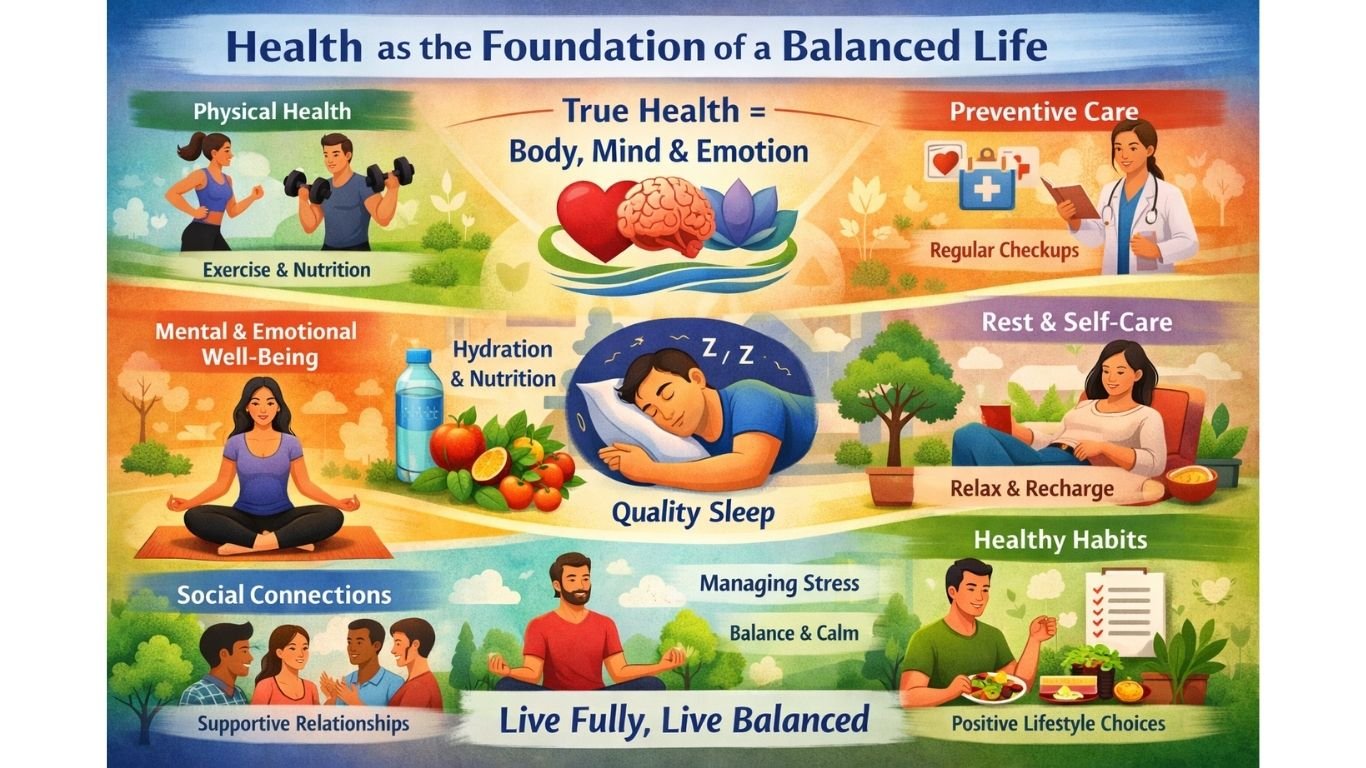
Understanding the True Meaning of Health
Health is not limited to the absence of illness; it includes physical, mental, and emotional well-being. A healthy person feels energetic, focused, and emotionally stable. Maintaining good health allows individuals to live life fully and handle daily responsibilities more effectively.
The Importance of Physical Health
Physical health plays a vital role in overall well-being. A strong body supports daily activities and reduces the risk of chronic diseases. Regular movement, proper rest, and balanced nutrition help maintain physical strength. When the body is healthy, it becomes easier to stay active and productive.
Mental Health and Emotional Stability
Mental health is equally important as physical health. Stress, anxiety, and emotional pressure can affect daily life if not managed properly. Taking time to relax, sharing feelings, and practicing mindfulness support emotional balance. A healthy mind improves decision-making and personal relationships.
Nutrition as a Key Health Factor
Nutrition provides the fuel the body needs to function properly. Eating a balanced diet with fruits, vegetables, proteins, and whole grains supports energy and immunity. Healthy eating habits improve digestion and overall performance. Good nutrition is a long-term investment in health.
The Role of Hydration in Health
Water is essential for almost every function in the body. Proper hydration supports digestion, circulation, and temperature control. Drinking enough water daily helps maintain energy levels and skin health. Staying hydrated is a simple yet powerful health habit.
Exercise and Its Health Benefits
Regular exercise improves physical and mental health. It strengthens muscles, improves heart health, and boosts mood. Exercise also helps manage weight and reduce stress. Even simple activities like walking or stretching can make a positive difference.
Sleep and Its Impact on Health
Quality sleep is essential for body recovery and mental clarity. During sleep, the body repairs itself and restores energy. Poor sleep can affect focus, mood, and immunity. Maintaining a regular sleep routine supports long-term health and productivity.
Preventive Care and Regular Checkups
Preventive care helps detect health issues early. Regular medical checkups allow individuals to monitor their health status. Early detection reduces risks and improves treatment outcomes. Preventive care supports a proactive approach to health management.
Healthy Lifestyle Choices
Lifestyle choices strongly influence health. Avoiding harmful habits and choosing positive routines improves quality of life. Balanced routines, healthy social interactions, and stress management contribute to overall well-being. Small daily choices create long-term health benefits.
The Connection Between Health and Productivity
Good health improves focus, energy, and efficiency. Healthy individuals perform better at work and in personal life. Physical strength and mental clarity support better time management and creativity. Health is closely linked to success and personal growth.
The heart has its reasons which reason knows not. It’s no use going back to yesterday, because I was a different person then. Life is to be lived, not controlled.
Managing Stress for Better Health
Stress is a common part of modern life, but unmanaged stress can harm health. Relaxation techniques, hobbies, and time management help reduce stress. Learning to manage stress protects both mental and physical health. A calm mind supports better health decisions.
Building Healthy Habits Over Time
Healthy habits develop gradually through consistency. Small changes such as regular walking, mindful eating, or early bedtime create positive results. Long-term health is built through patience and discipline. Sustainable habits lead to lasting well-being.
Social Connections and Health
Social relationships influence emotional health. Supportive connections reduce feelings of loneliness and stress. Positive interactions improve mood and mental strength. Healthy relationships contribute to a balanced and fulfilling life.
The Importance of Self-Care
Self-care involves taking time to meet personal needs. It includes rest, relaxation, and personal enjoyment. Self-care prevents burnout and supports emotional balance. Prioritizing self-care is essential for maintaining good health.
Health Awareness and Education
Understanding health-related information empowers individuals. Health awareness encourages informed choices and responsible behavior. Educated individuals are more likely to adopt healthy lifestyles. Knowledge supports better health outcomes.
Conclusion: Investing in Lifelong Health
Health is a lifelong journey that requires attention and care. Physical strength, mental balance, and healthy habits create a strong foundation. By making thoughtful choices and prioritizing well-being, individuals can enjoy a healthier and more fulfilling life.