
Have you ever had one of those days where everything just clicks? The coffee tastes perfect, your tasks line up neatly, and even traffic seems to cooperate. Now imagine having that kind of day more often — not by luck but by design. That’s where the concept of Schedow comes in.
But what exactly is Schedow, and why are more people talking about it as a new approach to time, balance, and flow? Let’s explore this quietly powerful concept that might just change the way you organize your world.
What Is Schedow?
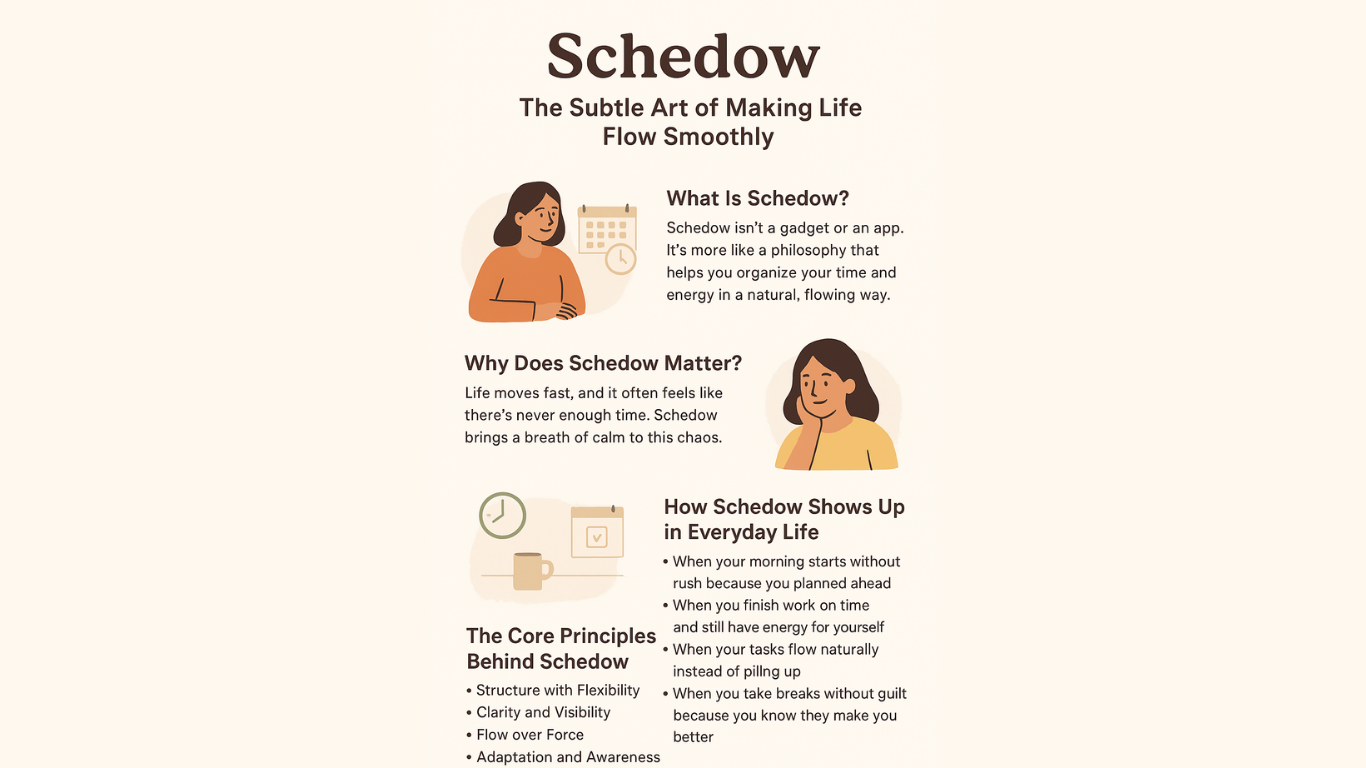
Schedow isn’t a gadget or an app. It’s more like a philosophy that helps you organize your time and energy in a natural, flowing way. Think of it as the balance between structure and spontaneity. It helps you get things done without feeling trapped by a rigid schedule.
While the name “Schedow” sounds modern and sleek, the idea itself is simple — a balance between schedule and shadow. It’s about structuring your day without overshadowing the joy of living.
You could say Schedow is like a quiet rhythm guiding you through your daily routine. It’s not about being perfect. It’s about being present and productive at the same time.
Why Does Schedow Matter?
Life moves fast, and it often feels like there’s never enough time. We chase deadlines, juggle commitments, and end up losing touch with what truly matters. Schedow brings a breath of calm to this chaos.
It reminds you that productivity doesn’t have to mean pressure. You can still meet goals while making space for creativity, rest, and connection. In short, Schedow matters because it brings back balance — something most people have been missing.
It’s not just about doing more. It’s about doing better, with less stress.
How Schedow Shows Up in Everyday Life
You don’t have to completely change your lifestyle to experience Schedow. It often appears in small, unnoticed moments.
- When your morning starts without rush because you planned ahead.
- When you finish work on time and still have energy for yourself.
- When your tasks flow naturally instead of piling up.
- When you take breaks without guilt because you know they make you better.
That’s Schedow — the smooth coordination between effort and ease.
The Core Principles Behind Schedow
At its heart, Schedow runs on a few simple principles that anyone can apply.
1. Structure with Flexibility
Schedow encourages you to build a routine that has room to breathe. Instead of filling every hour, leave space for adjustments. The magic happens in the balance between planning and spontaneity.
2. Clarity and Visibility
Knowing what you need to do — and when — removes half the stress. Schedow promotes transparency in your own routine, whether through a planner, a wall calendar, or a mental roadmap.
3. Flow over Force
Not every task needs to be forced. Schedow teaches you to follow natural energy patterns. Tackle challenging work when you’re most alert, and save lighter tasks for later.
4. Adaptation and Awareness
Life changes, and so should your schedule. Being able to shift plans gracefully is part of what makes Schedow so powerful.
How Schedow Improves Personal Productivity
We’ve all tried rigid time-blocking systems or complicated productivity tools that left us more stressed than before. Schedow works differently. It’s about harmony, not control.
By using Schedow principles, you start noticing when you’re most creative or focused. You’ll know when to rest and when to push forward. It’s a rhythm that suits you, not a formula you’re forced to follow.
When you apply Schedow:
- You think more clearly.
- You multitask less and focus better.
- You end the day with satisfaction instead of exhaustion.
That’s not just productivity — that’s smart living.
Schedow at Work: Team and Organization Benefits
Schedow isn’t just for individuals. Teams can also benefit when they adopt its mindset. A workplace that follows Schedow principles tends to communicate better and burn out less.
Managers create schedules that respect energy cycles. Meetings are timed strategically. Teams collaborate in harmony instead of chaos. The result? A culture that values outcomes over busywork.
When everyone works with a shared sense of flow, projects move faster and morale stays high. That’s the collective version of Schedow.
Common Mistakes People Make With Schedow
It’s easy to misunderstand Schedow as a fancy word for time management, but it’s more than that. Some people fall into traps like:
- Over-scheduling every hour, leaving no space for flexibility.
- Depending too much on digital tools instead of intuition.
- Treating Schedow as a trend rather than a mindset.
Schedow is not about control; it’s about awareness. If your schedule feels heavy instead of freeing, it’s time to adjust.
Practical Steps to Bring Schedow Into Your Life
So, how do you begin? You don’t need to overhaul your entire system. Just take a few small steps.
Step 1: Observe Your Rhythm
For a few days, track your energy and focus. When do you feel sharp? When do you fade? This self-awareness is key.
Step 2: Create Gentle Structure
Plan your day around your natural rhythm. If you’re a morning person, handle the hardest work early. If you bloom at night, adjust accordingly.
Step 3: Build White Space
Don’t pack your day back-to-back. Leave time between tasks for reflection, recovery, or even small moments of joy.
Step 4: Prioritize What Matters
Focus on the few things that truly move your goals forward. The rest can wait or be delegated.
Step 5: Reflect and Adjust Weekly
Each week, take ten minutes to see what worked and what didn’t. Realign as needed.
Consistency in these steps transforms Schedow from an idea into a daily lifestyle.
Schedow and Mental Well-Being
Beyond time management, Schedow has a quiet effect on mental health. When life feels organized yet flexible, stress naturally goes down. You stop racing against the clock and start working with it.
You also feel more in control of your choices. There’s less guilt when you rest because you know rest is part of your plan. Over time, this leads to better focus, calm, and fulfillment.
In a world where burnout is common, Schedow acts like a gentle reminder to breathe, pause, and realign.
Technology’s Role in Schedow
While Schedow is deeply human, technology plays a helpful supporting role. Smart calendars, reminders, and automation can enhance your flow — as long as they don’t take over.
The trick is to use tech mindfully. Let it serve you, not the other way around. Use it to simplify, not complicate. A well-used tool amplifies Schedow, while an overused one destroys it.
It’s about balance — the same principle at the heart of Schedow itself.
The Future of Schedow
As life and work evolve, the Schedow mindset will likely become more essential. People are realizing that hustle without harmony leads to burnout. Companies are seeing that constant activity doesn’t always equal progress.
In the future, Schedow might shape how workplaces design their days, how families plan their routines, and even how schools teach time management. It’s the bridge between order and freedom — a human way to handle a digital world.
Why Schedow Feels So Natural
Unlike strict systems, Schedow feels intuitive because it mirrors the way we actually live. Our bodies and minds work in cycles. Energy rises and falls. Inspiration comes and goes.
Schedow doesn’t fight that. It flows with it. It’s the art of designing your day around who you really are, not who you’re supposed to be. That’s why it feels less like a system and more like a lifestyle.
Final Thoughts: Flow Over Force
Life will always have surprises. Deadlines will shift, plans will break, and unexpected moments will come your way. But if you live with Schedow — a gentle structure, awareness of rhythm, and room for change — you’ll move through it all with ease.
Schedow isn’t about perfection. It’s about progress without pressure. It’s about flow over force. And maybe, just maybe, it’s the key to making your days finally feel like your own.